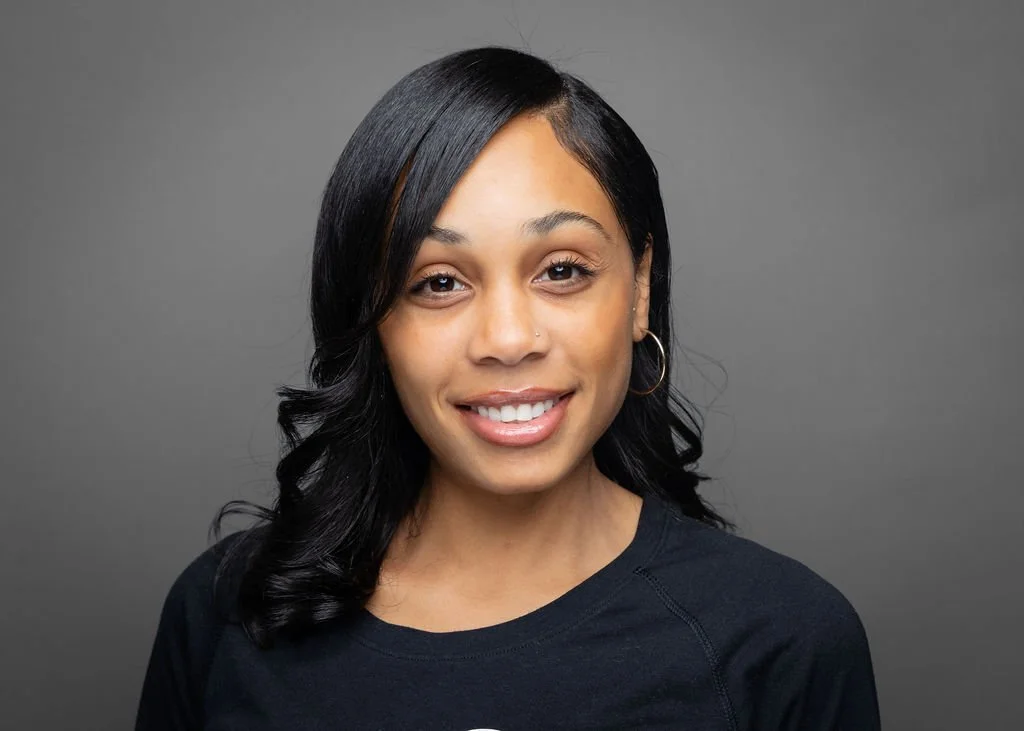
Showing Up Together
Long before peer support, I spent my early career working in customer service, focused on service and empathy. That is where I picked up the rule I still work by. If someone brings me a problem, we resolve it.
I also went through my own mental health challenges along the way, and I had to navigate finding resources for myself. Eventually I went back to school for social work and got certified in peer work, which coincided with the degree and gave me a way to get my feet wet in the field.
My days now are filled with outreach, bridging gaps in resources and care, making connections between individuals and providers, and making sure the people I work with are stable mentally and physically. Walking alongside them through the journey is really what it looks like.
A Note on a Door Hanger
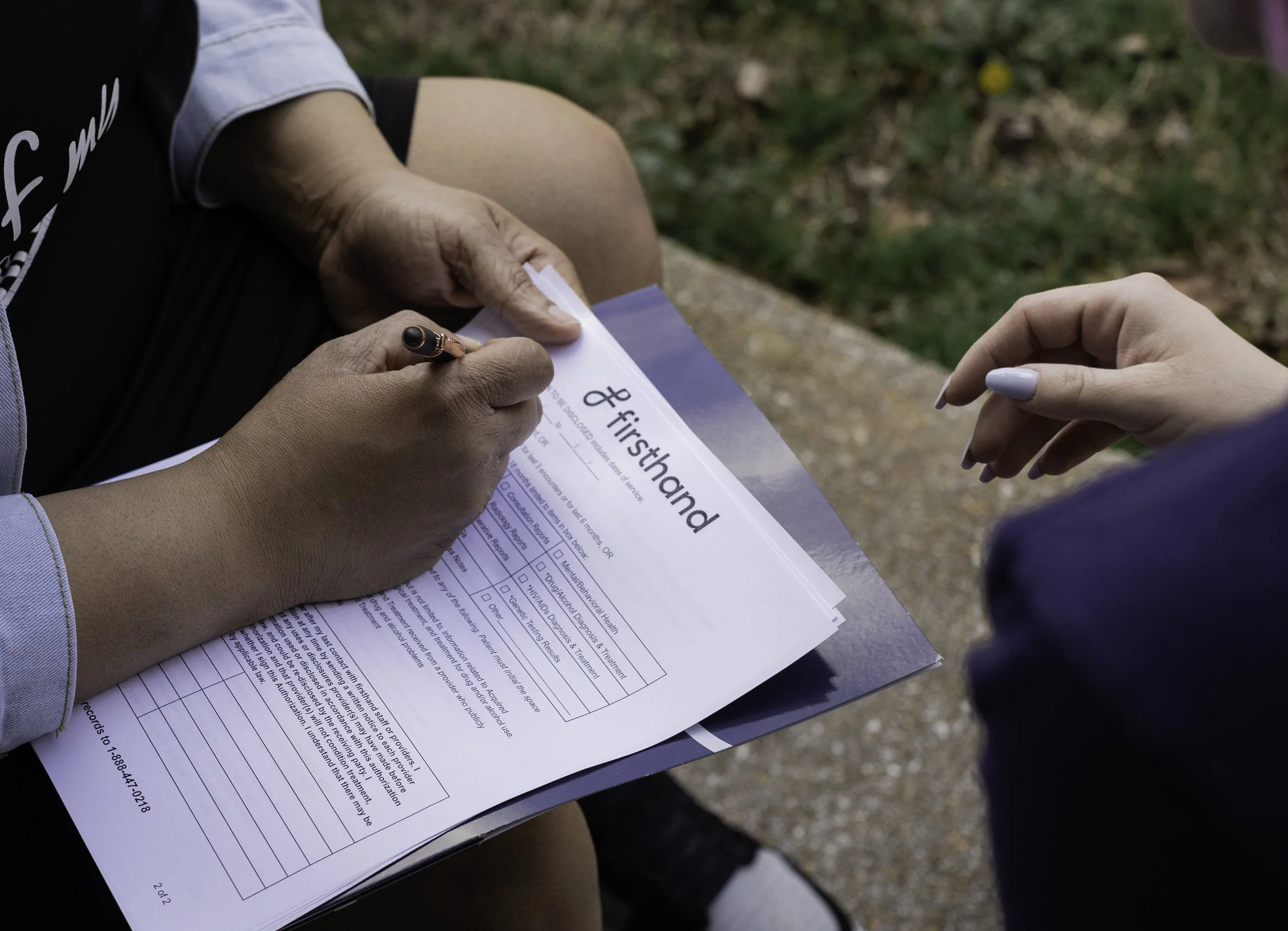
June* had already said she wasn’t interested in firsthand’s services. She was heavily connected, she said, and she leaned on the care coordinator through her insurance if she needed anything.
Nobody from the firsthand team had visited her at home yet, so I figured we could drop off some information. We left a door hanger. On mine, I staple my business card so people can see my face, and I wrote "give me a call" with a smiley face.
June contacted me.
She had been reading over the door hanger and remembered our initial phone call. The things listed on it caught her eye. In that first conversation she shared a little about herself and we built from there.
Five Years of Waiting
June is a transgender woman, and she had a major gender-affirming surgery coming up- one she had been working toward for the better part of five years.
When I met her, she was stable and heavily connected to her providers. But outside of those pre-existing resources, she did not have a broader support system. What she needed was someone to walk alongside her through this upcoming life-changing event.
She was honest with me early. She told me she can be a lot, warning me about it herself. So we established boundaries and made it clear what we could and could not help with, and inside of that we built a connection and let her know myself and my team were there to support her. She made it very clear that she wanted to work with female guides (peers).
The Day of the Surgery
I was not able to be there the day of her surgery, and that is when the other wonderful guides in our office jumped in.
Abbie and Vernon helped get her to the hospital, an hour outside the city. Abbie stayed with her through the whole surgery and made sure she was okay afterward. The next day, Vernon picked her up, gathered all the things she needed, and transported her back to her home, and he made sure she was doing okay there before he left. From there, our team made sure anything related to the surgery was addressed- right down to getting her gauze pads.
The Harder Part Came After
Successful recovery from this surgery depends on an aftercare routine she had to do several times a day, exactly as her surgeon instructed. If it does not happen, there could be serious complications. After all the hoops she went through to get approved for the procedure, it had to work.
Healing was difficult. There was discomfort and pain, and she was scared. The aftercare routine was not being followed. She started making calls to our nurse triage line to explain what was going on.
This is the part of her story I think about the most. When there are no major challenges in front of us, most of us can operate inside a certain amount of loneliness and still manage our conditions. It is when a significant life event shows up that we find out whether we have built sufficient support around us, and if we have not, that loneliness can amplify a lot of the challenges we are already facing. Loneliness kills. We have seen it again and again, and when we approach it from a team perspective, we can really make an impact.
The nurse reached out to let me know about those calls, and told me a meeting with her surgeon was coming up.
I told June I could not physically go, but that I wanted to be on the call by video with her permission. I wanted to make sure I was hearing what the surgeon was telling her, to be a part of the instructions, and to be able to address her concerns and advocate for her if needed.. I explained that we all needed to be on the same page to support her. She agreed.
The surgeon walked us through everything and explained that what she was experiencing was normal.
I called her afterward and we had a real, raw conversation about the importance of aftercare and what the consequences would be if the protocol wasn’t followed. I told her that if I needed to call her twice a day, five days a week, to give her encouragement, that is what I was going to do. She told me that was exactly what she needed to hold herself accountable.
So I called. Then she made a chart for herself, so she could tell me what days and what times. Then I went out to see her. After that I did not need to call as often, because she was holding herself accountable and needing me less.
Having a cheerleader- someone who would hold her accountable, was the shift.
Where She Is Now
June is back to being stable, doing the proper protocol she was instructed to do.
That same shift shows up in the rest of her life now. She is more proactive in her health rather than waiting for people to show up. She does really well communicating her needs. She is taking her medication. And she is taking her mental health more seriously, which was a part that had not been attended to as closely in the past. On a recent call she told me she has re-engaged with her skill builder and her therapist, which was a huge step.
She has come across organizations that show up and then disappear. What was different with us is that we actually did what we said we would do from day one. She looks at us as an extended family now, and she is very open and shares quite a bit.
We all have ups and downs. I met June at a time when she felt stable, and then a surgery changed what she needed. Our work was helping bring her back to that stability.
When I think back on all of it, the part that mattered most came before any of the rest. It was that first conversation, when she shared a little about herself and I picked up on it and used it to connect. Meeting an individual where they are is where it starts, and everything my team was able to give her grew out of that.
*Name has been changed for privacy